Our articles at a glance.
Filter by topic or browse them all. Written by our advisers, based on real conversations at the kitchen table.
What mantelzorg and mantelzorgwoning mean in English
Mantelzorg is the Dutch word for informal care: help you give someone because of a personal relationship, not as a job. This page explains the legal meaning, what being a carer (mantelzorger) gives you in practice, what a mantelzorgwoning is, and the Dutch terms you will meet at your municipality or employer.

What is a kangoeroewoning (kangaroo home)?
A kangoeroewoning (kangaroo home) is one building with two independent living spaces under the same roof. A garden home stands separately in the garden. The difference determines whether you have to move, and that is usually the whole decision.
Who is a garden home (mantelzorgwoning) intended for?
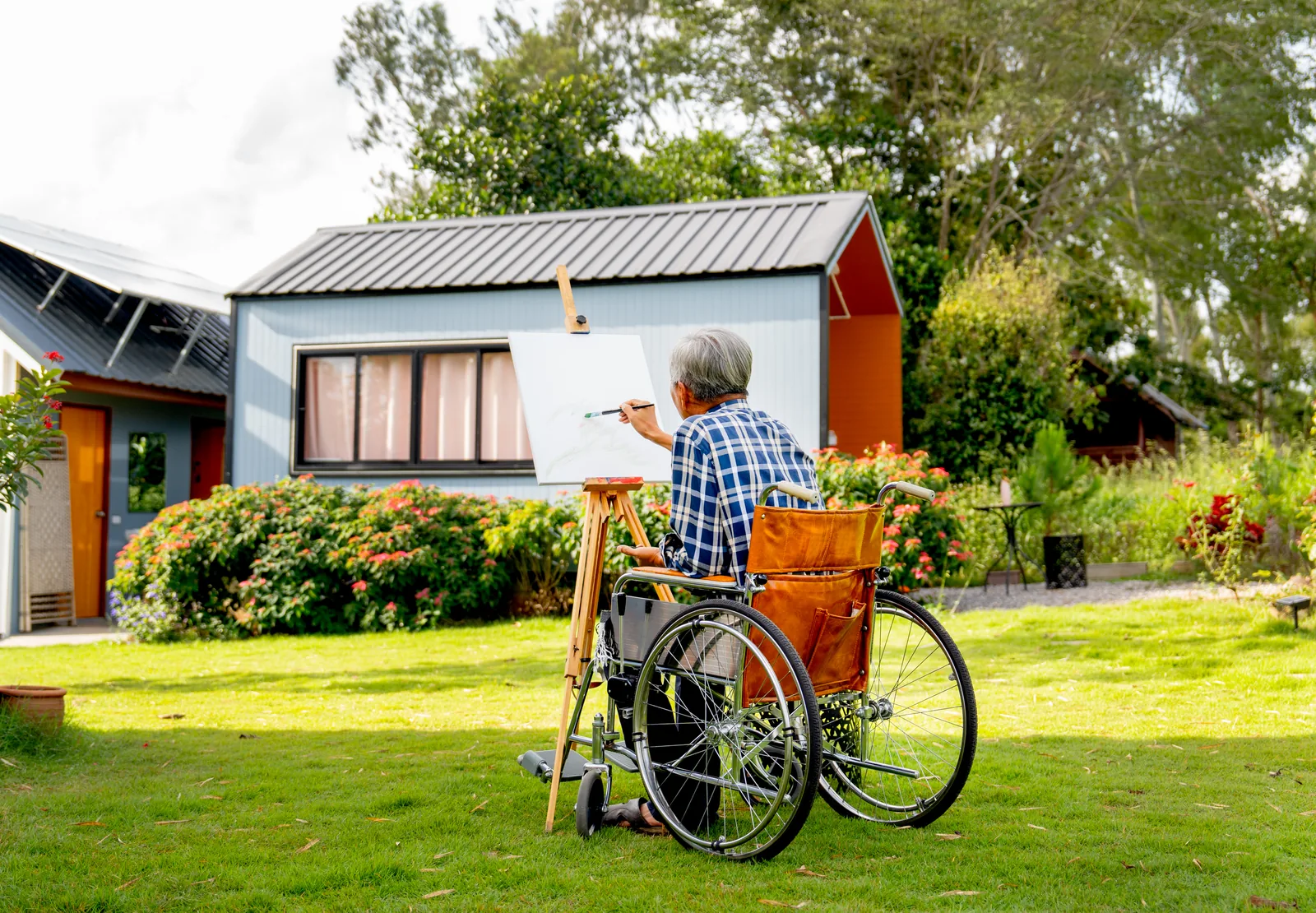
A garden home is intended for two people at once: the person who needs care and the person who gives the care. Below you will find the definition of informal care from the Wmo 2015 (Social Support Act), who may live in the home, what the municipality wants to see and what support exists for carers.

Are there subsidies for buying a garden home?
There is no national subsidy for buying a garden home. Money can come from four other directions, though: a customised provision under the Wmo (Social Support Act), a municipal loan such as the Blijverslening or Verzilverlening, a local scheme from your own municipality, and the tax side. The most important rule is to apply before you buy.
What exactly is a garden home (mantelzorgwoning)?
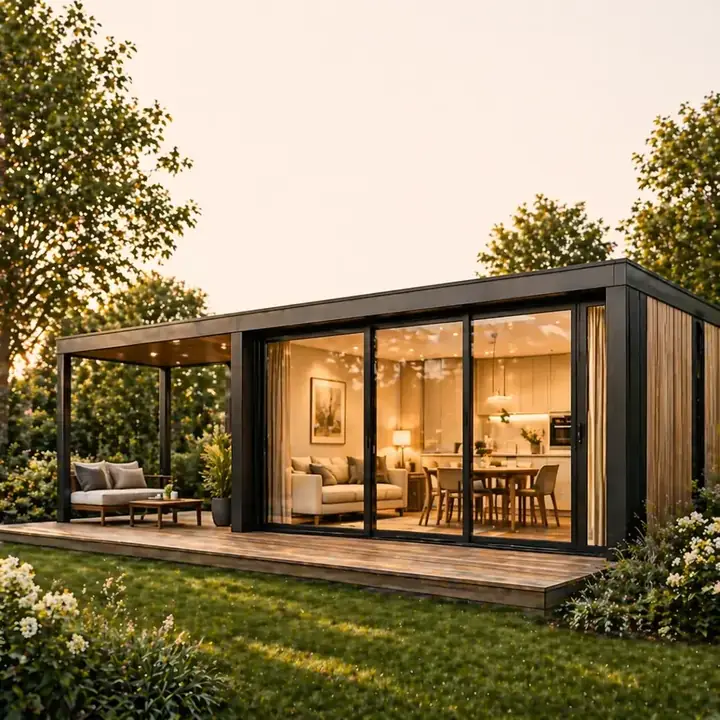
A self-contained home on the grounds of an existing house, for someone who receives care or who gives care. Three features make it what it is: it can be lived in independently, with its own front door, kitchen and bathroom; it stands with an existing home rather than on a plot of its own; and its use depends on a care relationship. That last point is what makes it legally possible and, at the same time, what limits it.
What is a garden home (mantelzorgwoning)?
A garden home (mantelzorgwoning) is a self-contained home on the grounds of an existing house, intended for someone who needs care or for the person who provides it. It has its own front door, its own kitchen and its own bathroom, and usually stands in the back garden of a child, a parent or someone else close to the family.
What makes it special in legal terms is not the building but its use. An outbuilding of the same size may stand in many gardens without a permit; living in it independently is allowed because informal care (mantelzorg) is being provided as defined in the Wet maatschappelijke ondersteuning (Wmo, Social Support Act). If the care relationship ends, the basis for that use ends too.
When a garden home comes into the picture
The conversation usually starts after something happens: a fall, a diagnosis, a hospital stay with a discharge date. These are the four situations we see most often.
- A parent who still manages, but no longer on their own, and lives too far away.
- A chronic illness or disability that makes climbing stairs or showering no longer straightforward.
- Early-stage dementia, where supervision close by makes the difference between staying at home and moving.
- An adult child with a disability who wants to live independently, but not far away.
There is no age limit and no assessment from the care office (zorgkantoor) is needed. What the municipality wants to know is whether informal care is genuinely being provided; many municipalities ask for a statement from a GP, a district nurse or a social-medical adviser for this. In who a garden home is intended for you can read exactly what counts as informal care and what support exists for carers.
Is it allowed on your property
That depends on your plot. The national rules determine when an outbuilding in the rear yard area may stand without a permit; your municipality fills these in through its environmental plan (omgevingsplan), with its own rules on floor area, height and the distance to the property boundary. Two identical gardens in different municipalities can therefore lead to a different outcome.
That is where every rule of thumb from the internet breaks down, even the ones that are correct in themselves. Our permit check retrieves the rules that apply to your address and shows where the national basic rule and your municipality differ. It takes ten minutes and it shapes the rest of the process. The background is in the main municipal rules.
What it costs and how long it takes
Our homes cost between €95,900 and €195,900 including VAT, depending on the model and the finish, including transport to your address. We budget the foundation and utility connections separately after a visit to your plot, because they depend on your ground conditions and on the distance that has to be dug. The full breakdown is in what a garden home costs.
The lead time is shorter than people expect. The home is built in six to eight weeks in our own production facility while the foundation and utility connections are prepared at your property, and the installation takes one day. From the first conversation to handing over the keys, that is usually two to three months if it can be done permit-free. See how long building takes.
How big is a home like this
Our models range from 36 to just over 80 m², all single-storey and with one bedroom. More important than the living area is the footprint: a home of 36.1 m² takes up 42 m² of your garden, and on top of that comes space to walk around it, a terrace and a path. In how big a garden home is you will find our external dimensions with a worked example for your garden.
Buying, renting or second-hand
There are three routes. Buying is the usual one, and the question of how you pay for it comes down to the surplus value of your house, a mortgage or sometimes a municipal loan. Renting from us starts at around €1,100 a month and is usually the better choice if you do not have the amount available in one go or do not know how long the care will last. Second-hand is the cheapest route, with a small and largely invisible supply that mostly goes through the suppliers.
What there is to say about subsidies is brief: there is no national scheme for the purchase. The municipality can, however, contribute to adaptations under the Wmo, and there are municipal loans for living at home for longer. You can read about this in are there subsidies.
What happens when the care ends
This is the question that ought to be asked beforehand and usually comes afterwards. Because the exception depends on the care situation, the home may not simply continue to be lived in as a self-contained home after that. There are three ways out: a different use that is permitted, moving it, or returning it to the supplier. We buy back our own homes, refurbish them and offer them again, so with us that way out is guaranteed.
How this knowledge base is organised
The articles above are written on the basis of the questions that come up at our kitchen tables, organised by topic: permits and regulations, costs and financing, the building and installation process, care and assessment, design and layout, and the experiences of families. Each article lists the sources it is based on, with a reference to the relevant article of law where there is one.
If your question is not among them, feel free to call us. And if you are just starting out, first do the permit check for your address and then look at the models with their floor plans. In that order, because there is little point in choosing a home that is not allowed on your property.
Is your question not listed?
Feel free to call us, or have our adviser visit you. Free and without obligation, at your kitchen table.
Book a free consultation